Why Divorce.com

Services

Resources

Online Divorce

Divorce Guides

States

Liz, CEO of divorce.com

We believe in second chances.

Our CEO Liz is getting remarried this weekend — celebrate with 20% off divorce packages through Sunday, June 28th.

CODE SECONDCHANCES
Liz, CEO of divorce.com

We believe in second chances.

Our CEO Liz is getting remarried this weekend — celebrate with 20% off divorce packages through Sunday, June 28th.

CODE SECONDCHANCES
Liz, CEO of divorce.com

We believe in second chances.

Our CEO Liz is getting remarried this weekend — celebrate with 20% off divorce packages through Sunday, June 28th.

CODE SECONDCHANCES

SIMPLIFYING YOUR DIVORCE

California Divorce Papers

If you're starting a divorce in California, the paperwork can feel like the hardest part. There's a stack of state forms with cryptic numbers, strict timing rules, and a financial disclosure process that trips up even organized people. This guide walks you through the California divorce papers, what each one does, where to get them, and how the process moves from filing to final judgment. In the past year we've helped more than 5,500 couples in California, so we know exactly where people get stuck.

California is a no-fault, community property state, which shapes nearly every form you'll touch. The information here is educational and describes what each document does and when it's used. It is not legal advice. For guidance on your specific situation, consult an attorney. When you're ready to prepare your paperwork without the guesswork, Divorce.com can assemble your California forms for you.

If you're starting a divorce in California, the paperwork can feel like the hardest part. There's a stack of state forms with cryptic numbers, strict timing rules, and a financial disclosure process that trips up even organized people. This guide walks you through the California divorce papers, what each one does, where to get them, and how the process moves from filing to final judgment. In the past year we've helped more than 5,500 couples in California, so we know exactly where people get stuck.

California is a no-fault, community property state, which shapes nearly every form you'll touch. The information here is educational and describes what each document does and when it's used. It is not legal advice. For guidance on your specific situation, consult an attorney. When you're ready to prepare your paperwork without the guesswork, Divorce.com can assemble your California forms for you.

Which California Divorce Forms Will You Need?

California divorce forms are published by the Judicial Council and share the "FL-" prefix. The exact set you need depends on whether your case is contested or uncontested, whether you have minor children, and whether support or property division is involved. Below is what each commonly used form does and when it applies. These descriptions explain the purpose of each document; they are not instructions on what to file for your circumstances. Because California is a community property and no-fault state, several of these forms exist specifically to document financial disclosure and equal division.

Starting the Case

FL-100 — Petition (Marriage/Domestic Partnership)
Initiates the divorce, legal separation, or annulment case. Filed by the petitioner. Both spouses can also file together as co-petitioners on a single FL-100 to streamline an agreed case.

FL-110 — Summons (Family Law)
Served on the respondent with the petition. It notifies them of the case and triggers Automatic Temporary Restraining Orders (ATROs) on both parties the moment it is issued and served, restricting asset transfers, child relocation, and insurance changes without notice.

FL-105 — Declaration Under UCCJEA
Required when minor children are involved. It tells the court where the children live and whether any other custody proceedings exist.

FL-115 — Proof of Service of Summons (Family Law)
Filed to prove the respondent was served with the petition and summons.

Responding to the Case

FL-120 — Response (Marriage/Domestic Partnership)
Filed by the respondent to participate in the case. It is due within 30 days of service.

FL-130 — Appearance, Stipulations, and Waivers
Signed by the respondent to appear without a hearing and waive further notice. Used in agreed, uncontested cases.

Financial & Disclosure

California requires both parties to exchange a financial disclosure package. The disclosure itself is served on the other party, not filed; only a declaration confirming service goes to the court.

FL-140 — Declaration of Disclosure
The cover sheet for the financial disclosure package. Each party serves a preliminary disclosure on the other.

FL-142 — Schedule of Assets and Debts
Lists all property and debts. Part of the mandatory financial disclosure.

FL-150 — Income and Expense Declaration
Details each party's income, expenses, and financial situation. Part of mandatory disclosure and required for support orders.

FL-141 — Declaration Regarding Service of Declaration of Disclosure
Filed with the court to confirm the preliminary disclosure package was served. The disclosure documents themselves are not filed, only this cover declaration.

FL-144 — Stipulation and Waiver of Final Declaration of Disclosure
Signed by both parties to waive the final (as opposed to preliminary) disclosure exchange. Commonly used in agreed cases.

Forms for Divorces With Children

FL-311 — Child Custody and Visitation (Parenting Time) Application Attachment
Attachment to the petition or a request for order that details the requested custody and parenting time schedule. Revised effective January 1, 2026.

FL-341 — Child Custody and Visitation (Parenting Time) Order Attachment
States the court's custody and parenting time orders. Attached to the judgment or hearing order. Revised effective January 1, 2026. Lettered sub-attachments FL-341(A) through FL-341(E) carry additional specific orders: FL-341(A) covers supervised visitation, FL-341(B) child abduction prevention, FL-341(C) children's holiday schedules, FL-341(D) additional physical custody provisions, and FL-341(E) joint legal custody terms.

FL-342 — Child Support Information and Order Attachment
States the court's child support orders. Attached to the FL-180 judgment or an FL-340 hearing order. Revised effective September 1, 2024. The support amount is calculated using approved guideline software (Dissomaster or XSpouse), not entered by hand.

FL-192 — Notice of Rights and Responsibilities (Health-Care Costs and Reimbursement Procedures)
A required attachment in any case with child support orders. It advises parties of ongoing obligations.

FL-191 — Child Support Case Registry Form
Registers the child support order with the state registry. Required whenever any child support is ordered.

Settlement or Separation Agreement

FL-343 — Spousal, Partner, or Family Support Order Attachment
States spousal or partner support orders. Attached to the judgment.

FL-160 — Property Declaration
Lists community and separate property for the court. Used when property division needs to be set out in the judgment.

Marital Settlement Agreement (MSA)
California has no standard Judicial Council form for the MSA itself. Parties draft their own written agreement covering property, support, and parenting terms, which is then attached to the FL-180 judgment. Some counties publish local templates, but these are not statewide forms.

Finalizing Your Case

FL-165 — Request to Enter Default
Filed after a respondent fails to respond within 30 days. It allows the petitioner to proceed without the respondent's participation.

FL-170 — Declaration for Default or Uncontested Dissolution or Legal Separation
Signed under penalty of perjury, confirming the case meets the requirements for a default or uncontested judgment.

FL-180 — Judgment
The final judgment form and the operative final decree. Attachments such as FL-341, FL-342, and FL-343 carry the specific orders. Signed by the judge.

FL-190 — Notice of Entry of Judgment
Served on both parties after the judge signs the FL-180. It confirms the judgment date and the date the marriage is legally terminated.

FL-182 — Judgment Checklist (Dissolution/Legal Separation)
A reference checklist (not filed) used to make sure all required attachments are included before submitting the judgment package.

Where to Get California Divorce Forms

You have several options for obtaining and completing your California divorce papers, depending on how much support you want.

Official State Courts Self-Help Site

The California Courts self-help center publishes every current FL- form for free. You can download fillable PDFs at selfhelp.courts.ca.gov/divorce-forms. Always confirm you're using the most recent revision of each PDF before filing, since some portal listing dates may lag behind the actual current form version.

County Superior Court Clerk

You file your completed forms with the Superior Court in the county where you meet residency. Many counties (Los Angeles, San Diego, San Francisco, and others) require additional local cover sheets, family law information sheets, or income withholding addenda. Check your specific superior court's website before filing.

Legal Aid & Family Law Facilitator

Each county court has a family law facilitator who can help self-represented parties, including with the guideline child support calculation. Local legal aid organizations may also assist if you qualify.

Online Divorce Services (Divorce.com)

Divorce.com prepares your California forms based on your answers, so you don't have to decipher which FL- numbers apply or how the financial disclosure pieces fit together. It's designed for uncontested cases where both spouses want a straightforward, accurate paperwork package.

Hire an Attorney

If your case is contested, involves complex assets, a business, or contested custody, a California family law attorney can prepare and file on your behalf. An attorney is the right source when you need advice specific to your situation.

The California Divorce Process

1. Confirm Residency

At least one spouse must have lived in California for 6 months and in the filing county for 3 months. Registered domestic partners and same-sex couples married in California may be able to file even if they now live elsewhere.

2. File the Petition

The petitioner files the FL-100 (and FL-105 if there are minor children) with the FL-110 summons at the Superior Court and pays the filing fee or requests a fee waiver.

3. Serve the Other Spouse

The respondent must be served with the petition and summons by someone over 18 who is not a party. Service is documented on the FL-115. The ATROs take effect on both parties at this point.

4. Exchange Financial Disclosures

Both parties prepare and serve their preliminary declaration of disclosure (FL-140, FL-142, FL-150) on each other, then file the FL-141 to confirm service. This step is mandatory even in agreed cases.

5. Observe the Waiting Period

California imposes a mandatory 6-month waiting period that runs from the date the respondent was served or filed a response. A divorce cannot be finalized before that date, no matter how quickly the paperwork is completed. There is no waiting period for legal separation.

6. Final Judgment & Certified Copies

Once the agreement or default package is complete, the judge signs the FL-180 judgment. The FL-190 Notice of Entry of Judgment confirms the date the marriage legally ends. Request certified copies for your records, lenders, and name-change needs.

California-Specific Requirements You Should Know

Residency: One spouse must have lived in California for 6 months and in the filing county for 3 months, with an exception for registered domestic partners and same-sex couples married in California.

Property regime: California is a community property state. Assets and debts acquired during the marriage are presumed equally owned and split 50/50 unless there is a valid agreement or property can be traced to separate property. There is no equitable distribution discretion.

Grounds: California is no-fault only. The sole ground is irreconcilable differences. Marital misconduct cannot be pleaded and the court cannot weigh fault in property division or support, with narrow exceptions tied to domestic violence in the support context.

Waiting period: A divorce cannot be finalized until at least 6 months after the respondent was served or responded.

For context, California sees roughly 90 divorces per 1,000 people per year, according to White Oak Law's 2024 statistics.

Common Mistakes to Avoid

Skipping or rushing the financial disclosure

The preliminary disclosure (FL-140, FL-142, FL-150) is mandatory. Incomplete or omitted disclosure is one of the most common reasons judgments get rejected or later challenged.

Filing the disclosure documents with the court

In California, the disclosure package is served on the other party, not filed. Only the FL-141 declaration confirming service goes to the court.

Missing local county requirements

Many counties require extra local forms. Submitting only the statewide FL- forms can lead to a rejected filing.

Expecting to finish before six months

Even a fully agreed case cannot be finalized before the 6-month waiting period ends. Plan timing accordingly.

Using an outdated form version

FL-311 and FL-341 were revised effective January 1, 2026, and FL-342 was revised September 1, 2024. Always download the current PDF.

How Divorce.com Can Help

California's forms, disclosure rules, and community property requirements are a lot to manage on your own. Divorce.com takes the guesswork out by preparing your paperwork from a simple set of questions.

  • Completed, current California FL- forms matched to your situation

  • Step-by-step filing and service instructions for your county

  • Guidance through the mandatory financial disclosure package

  • Support designed for uncontested cases, at a fraction of attorney cost

  • Backed by a team that has helped thousands of California couples


Which California Divorce Forms Will You Need?

California divorce forms are published by the Judicial Council and share the "FL-" prefix. The exact set you need depends on whether your case is contested or uncontested, whether you have minor children, and whether support or property division is involved. Below is what each commonly used form does and when it applies. These descriptions explain the purpose of each document; they are not instructions on what to file for your circumstances. Because California is a community property and no-fault state, several of these forms exist specifically to document financial disclosure and equal division.

Starting the Case

FL-100 — Petition (Marriage/Domestic Partnership)
Initiates the divorce, legal separation, or annulment case. Filed by the petitioner. Both spouses can also file together as co-petitioners on a single FL-100 to streamline an agreed case.

FL-110 — Summons (Family Law)
Served on the respondent with the petition. It notifies them of the case and triggers Automatic Temporary Restraining Orders (ATROs) on both parties the moment it is issued and served, restricting asset transfers, child relocation, and insurance changes without notice.

FL-105 — Declaration Under UCCJEA
Required when minor children are involved. It tells the court where the children live and whether any other custody proceedings exist.

FL-115 — Proof of Service of Summons (Family Law)
Filed to prove the respondent was served with the petition and summons.

Responding to the Case

FL-120 — Response (Marriage/Domestic Partnership)
Filed by the respondent to participate in the case. It is due within 30 days of service.

FL-130 — Appearance, Stipulations, and Waivers
Signed by the respondent to appear without a hearing and waive further notice. Used in agreed, uncontested cases.

Financial & Disclosure

California requires both parties to exchange a financial disclosure package. The disclosure itself is served on the other party, not filed; only a declaration confirming service goes to the court.

FL-140 — Declaration of Disclosure
The cover sheet for the financial disclosure package. Each party serves a preliminary disclosure on the other.

FL-142 — Schedule of Assets and Debts
Lists all property and debts. Part of the mandatory financial disclosure.

FL-150 — Income and Expense Declaration
Details each party's income, expenses, and financial situation. Part of mandatory disclosure and required for support orders.

FL-141 — Declaration Regarding Service of Declaration of Disclosure
Filed with the court to confirm the preliminary disclosure package was served. The disclosure documents themselves are not filed, only this cover declaration.

FL-144 — Stipulation and Waiver of Final Declaration of Disclosure
Signed by both parties to waive the final (as opposed to preliminary) disclosure exchange. Commonly used in agreed cases.

Forms for Divorces With Children

FL-311 — Child Custody and Visitation (Parenting Time) Application Attachment
Attachment to the petition or a request for order that details the requested custody and parenting time schedule. Revised effective January 1, 2026.

FL-341 — Child Custody and Visitation (Parenting Time) Order Attachment
States the court's custody and parenting time orders. Attached to the judgment or hearing order. Revised effective January 1, 2026. Lettered sub-attachments FL-341(A) through FL-341(E) carry additional specific orders: FL-341(A) covers supervised visitation, FL-341(B) child abduction prevention, FL-341(C) children's holiday schedules, FL-341(D) additional physical custody provisions, and FL-341(E) joint legal custody terms.

FL-342 — Child Support Information and Order Attachment
States the court's child support orders. Attached to the FL-180 judgment or an FL-340 hearing order. Revised effective September 1, 2024. The support amount is calculated using approved guideline software (Dissomaster or XSpouse), not entered by hand.

FL-192 — Notice of Rights and Responsibilities (Health-Care Costs and Reimbursement Procedures)
A required attachment in any case with child support orders. It advises parties of ongoing obligations.

FL-191 — Child Support Case Registry Form
Registers the child support order with the state registry. Required whenever any child support is ordered.

Settlement or Separation Agreement

FL-343 — Spousal, Partner, or Family Support Order Attachment
States spousal or partner support orders. Attached to the judgment.

FL-160 — Property Declaration
Lists community and separate property for the court. Used when property division needs to be set out in the judgment.

Marital Settlement Agreement (MSA)
California has no standard Judicial Council form for the MSA itself. Parties draft their own written agreement covering property, support, and parenting terms, which is then attached to the FL-180 judgment. Some counties publish local templates, but these are not statewide forms.

Finalizing Your Case

FL-165 — Request to Enter Default
Filed after a respondent fails to respond within 30 days. It allows the petitioner to proceed without the respondent's participation.

FL-170 — Declaration for Default or Uncontested Dissolution or Legal Separation
Signed under penalty of perjury, confirming the case meets the requirements for a default or uncontested judgment.

FL-180 — Judgment
The final judgment form and the operative final decree. Attachments such as FL-341, FL-342, and FL-343 carry the specific orders. Signed by the judge.

FL-190 — Notice of Entry of Judgment
Served on both parties after the judge signs the FL-180. It confirms the judgment date and the date the marriage is legally terminated.

FL-182 — Judgment Checklist (Dissolution/Legal Separation)
A reference checklist (not filed) used to make sure all required attachments are included before submitting the judgment package.

Where to Get California Divorce Forms

You have several options for obtaining and completing your California divorce papers, depending on how much support you want.

Official State Courts Self-Help Site

The California Courts self-help center publishes every current FL- form for free. You can download fillable PDFs at selfhelp.courts.ca.gov/divorce-forms. Always confirm you're using the most recent revision of each PDF before filing, since some portal listing dates may lag behind the actual current form version.

County Superior Court Clerk

You file your completed forms with the Superior Court in the county where you meet residency. Many counties (Los Angeles, San Diego, San Francisco, and others) require additional local cover sheets, family law information sheets, or income withholding addenda. Check your specific superior court's website before filing.

Legal Aid & Family Law Facilitator

Each county court has a family law facilitator who can help self-represented parties, including with the guideline child support calculation. Local legal aid organizations may also assist if you qualify.

Online Divorce Services (Divorce.com)

Divorce.com prepares your California forms based on your answers, so you don't have to decipher which FL- numbers apply or how the financial disclosure pieces fit together. It's designed for uncontested cases where both spouses want a straightforward, accurate paperwork package.

Hire an Attorney

If your case is contested, involves complex assets, a business, or contested custody, a California family law attorney can prepare and file on your behalf. An attorney is the right source when you need advice specific to your situation.

The California Divorce Process

1. Confirm Residency

At least one spouse must have lived in California for 6 months and in the filing county for 3 months. Registered domestic partners and same-sex couples married in California may be able to file even if they now live elsewhere.

2. File the Petition

The petitioner files the FL-100 (and FL-105 if there are minor children) with the FL-110 summons at the Superior Court and pays the filing fee or requests a fee waiver.

3. Serve the Other Spouse

The respondent must be served with the petition and summons by someone over 18 who is not a party. Service is documented on the FL-115. The ATROs take effect on both parties at this point.

4. Exchange Financial Disclosures

Both parties prepare and serve their preliminary declaration of disclosure (FL-140, FL-142, FL-150) on each other, then file the FL-141 to confirm service. This step is mandatory even in agreed cases.

5. Observe the Waiting Period

California imposes a mandatory 6-month waiting period that runs from the date the respondent was served or filed a response. A divorce cannot be finalized before that date, no matter how quickly the paperwork is completed. There is no waiting period for legal separation.

6. Final Judgment & Certified Copies

Once the agreement or default package is complete, the judge signs the FL-180 judgment. The FL-190 Notice of Entry of Judgment confirms the date the marriage legally ends. Request certified copies for your records, lenders, and name-change needs.

California-Specific Requirements You Should Know

Residency: One spouse must have lived in California for 6 months and in the filing county for 3 months, with an exception for registered domestic partners and same-sex couples married in California.

Property regime: California is a community property state. Assets and debts acquired during the marriage are presumed equally owned and split 50/50 unless there is a valid agreement or property can be traced to separate property. There is no equitable distribution discretion.

Grounds: California is no-fault only. The sole ground is irreconcilable differences. Marital misconduct cannot be pleaded and the court cannot weigh fault in property division or support, with narrow exceptions tied to domestic violence in the support context.

Waiting period: A divorce cannot be finalized until at least 6 months after the respondent was served or responded.

For context, California sees roughly 90 divorces per 1,000 people per year, according to White Oak Law's 2024 statistics.

Common Mistakes to Avoid

Skipping or rushing the financial disclosure

The preliminary disclosure (FL-140, FL-142, FL-150) is mandatory. Incomplete or omitted disclosure is one of the most common reasons judgments get rejected or later challenged.

Filing the disclosure documents with the court

In California, the disclosure package is served on the other party, not filed. Only the FL-141 declaration confirming service goes to the court.

Missing local county requirements

Many counties require extra local forms. Submitting only the statewide FL- forms can lead to a rejected filing.

Expecting to finish before six months

Even a fully agreed case cannot be finalized before the 6-month waiting period ends. Plan timing accordingly.

Using an outdated form version

FL-311 and FL-341 were revised effective January 1, 2026, and FL-342 was revised September 1, 2024. Always download the current PDF.

How Divorce.com Can Help

California's forms, disclosure rules, and community property requirements are a lot to manage on your own. Divorce.com takes the guesswork out by preparing your paperwork from a simple set of questions.

  • Completed, current California FL- forms matched to your situation

  • Step-by-step filing and service instructions for your county

  • Guidance through the mandatory financial disclosure package

  • Support designed for uncontested cases, at a fraction of attorney cost

  • Backed by a team that has helped thousands of California couples


Which California Divorce Forms Will You Need?

California divorce forms are published by the Judicial Council and share the "FL-" prefix. The exact set you need depends on whether your case is contested or uncontested, whether you have minor children, and whether support or property division is involved. Below is what each commonly used form does and when it applies. These descriptions explain the purpose of each document; they are not instructions on what to file for your circumstances. Because California is a community property and no-fault state, several of these forms exist specifically to document financial disclosure and equal division.

Starting the Case

FL-100 — Petition (Marriage/Domestic Partnership)
Initiates the divorce, legal separation, or annulment case. Filed by the petitioner. Both spouses can also file together as co-petitioners on a single FL-100 to streamline an agreed case.

FL-110 — Summons (Family Law)
Served on the respondent with the petition. It notifies them of the case and triggers Automatic Temporary Restraining Orders (ATROs) on both parties the moment it is issued and served, restricting asset transfers, child relocation, and insurance changes without notice.

FL-105 — Declaration Under UCCJEA
Required when minor children are involved. It tells the court where the children live and whether any other custody proceedings exist.

FL-115 — Proof of Service of Summons (Family Law)
Filed to prove the respondent was served with the petition and summons.

Responding to the Case

FL-120 — Response (Marriage/Domestic Partnership)
Filed by the respondent to participate in the case. It is due within 30 days of service.

FL-130 — Appearance, Stipulations, and Waivers
Signed by the respondent to appear without a hearing and waive further notice. Used in agreed, uncontested cases.

Financial & Disclosure

California requires both parties to exchange a financial disclosure package. The disclosure itself is served on the other party, not filed; only a declaration confirming service goes to the court.

FL-140 — Declaration of Disclosure
The cover sheet for the financial disclosure package. Each party serves a preliminary disclosure on the other.

FL-142 — Schedule of Assets and Debts
Lists all property and debts. Part of the mandatory financial disclosure.

FL-150 — Income and Expense Declaration
Details each party's income, expenses, and financial situation. Part of mandatory disclosure and required for support orders.

FL-141 — Declaration Regarding Service of Declaration of Disclosure
Filed with the court to confirm the preliminary disclosure package was served. The disclosure documents themselves are not filed, only this cover declaration.

FL-144 — Stipulation and Waiver of Final Declaration of Disclosure
Signed by both parties to waive the final (as opposed to preliminary) disclosure exchange. Commonly used in agreed cases.

Forms for Divorces With Children

FL-311 — Child Custody and Visitation (Parenting Time) Application Attachment
Attachment to the petition or a request for order that details the requested custody and parenting time schedule. Revised effective January 1, 2026.

FL-341 — Child Custody and Visitation (Parenting Time) Order Attachment
States the court's custody and parenting time orders. Attached to the judgment or hearing order. Revised effective January 1, 2026. Lettered sub-attachments FL-341(A) through FL-341(E) carry additional specific orders: FL-341(A) covers supervised visitation, FL-341(B) child abduction prevention, FL-341(C) children's holiday schedules, FL-341(D) additional physical custody provisions, and FL-341(E) joint legal custody terms.

FL-342 — Child Support Information and Order Attachment
States the court's child support orders. Attached to the FL-180 judgment or an FL-340 hearing order. Revised effective September 1, 2024. The support amount is calculated using approved guideline software (Dissomaster or XSpouse), not entered by hand.

FL-192 — Notice of Rights and Responsibilities (Health-Care Costs and Reimbursement Procedures)
A required attachment in any case with child support orders. It advises parties of ongoing obligations.

FL-191 — Child Support Case Registry Form
Registers the child support order with the state registry. Required whenever any child support is ordered.

Settlement or Separation Agreement

FL-343 — Spousal, Partner, or Family Support Order Attachment
States spousal or partner support orders. Attached to the judgment.

FL-160 — Property Declaration
Lists community and separate property for the court. Used when property division needs to be set out in the judgment.

Marital Settlement Agreement (MSA)
California has no standard Judicial Council form for the MSA itself. Parties draft their own written agreement covering property, support, and parenting terms, which is then attached to the FL-180 judgment. Some counties publish local templates, but these are not statewide forms.

Finalizing Your Case

FL-165 — Request to Enter Default
Filed after a respondent fails to respond within 30 days. It allows the petitioner to proceed without the respondent's participation.

FL-170 — Declaration for Default or Uncontested Dissolution or Legal Separation
Signed under penalty of perjury, confirming the case meets the requirements for a default or uncontested judgment.

FL-180 — Judgment
The final judgment form and the operative final decree. Attachments such as FL-341, FL-342, and FL-343 carry the specific orders. Signed by the judge.

FL-190 — Notice of Entry of Judgment
Served on both parties after the judge signs the FL-180. It confirms the judgment date and the date the marriage is legally terminated.

FL-182 — Judgment Checklist (Dissolution/Legal Separation)
A reference checklist (not filed) used to make sure all required attachments are included before submitting the judgment package.

Where to Get California Divorce Forms

You have several options for obtaining and completing your California divorce papers, depending on how much support you want.

Official State Courts Self-Help Site

The California Courts self-help center publishes every current FL- form for free. You can download fillable PDFs at selfhelp.courts.ca.gov/divorce-forms. Always confirm you're using the most recent revision of each PDF before filing, since some portal listing dates may lag behind the actual current form version.

County Superior Court Clerk

You file your completed forms with the Superior Court in the county where you meet residency. Many counties (Los Angeles, San Diego, San Francisco, and others) require additional local cover sheets, family law information sheets, or income withholding addenda. Check your specific superior court's website before filing.

Legal Aid & Family Law Facilitator

Each county court has a family law facilitator who can help self-represented parties, including with the guideline child support calculation. Local legal aid organizations may also assist if you qualify.

Online Divorce Services (Divorce.com)

Divorce.com prepares your California forms based on your answers, so you don't have to decipher which FL- numbers apply or how the financial disclosure pieces fit together. It's designed for uncontested cases where both spouses want a straightforward, accurate paperwork package.

Hire an Attorney

If your case is contested, involves complex assets, a business, or contested custody, a California family law attorney can prepare and file on your behalf. An attorney is the right source when you need advice specific to your situation.

The California Divorce Process

1. Confirm Residency

At least one spouse must have lived in California for 6 months and in the filing county for 3 months. Registered domestic partners and same-sex couples married in California may be able to file even if they now live elsewhere.

2. File the Petition

The petitioner files the FL-100 (and FL-105 if there are minor children) with the FL-110 summons at the Superior Court and pays the filing fee or requests a fee waiver.

3. Serve the Other Spouse

The respondent must be served with the petition and summons by someone over 18 who is not a party. Service is documented on the FL-115. The ATROs take effect on both parties at this point.

4. Exchange Financial Disclosures

Both parties prepare and serve their preliminary declaration of disclosure (FL-140, FL-142, FL-150) on each other, then file the FL-141 to confirm service. This step is mandatory even in agreed cases.

5. Observe the Waiting Period

California imposes a mandatory 6-month waiting period that runs from the date the respondent was served or filed a response. A divorce cannot be finalized before that date, no matter how quickly the paperwork is completed. There is no waiting period for legal separation.

6. Final Judgment & Certified Copies

Once the agreement or default package is complete, the judge signs the FL-180 judgment. The FL-190 Notice of Entry of Judgment confirms the date the marriage legally ends. Request certified copies for your records, lenders, and name-change needs.

California-Specific Requirements You Should Know

Residency: One spouse must have lived in California for 6 months and in the filing county for 3 months, with an exception for registered domestic partners and same-sex couples married in California.

Property regime: California is a community property state. Assets and debts acquired during the marriage are presumed equally owned and split 50/50 unless there is a valid agreement or property can be traced to separate property. There is no equitable distribution discretion.

Grounds: California is no-fault only. The sole ground is irreconcilable differences. Marital misconduct cannot be pleaded and the court cannot weigh fault in property division or support, with narrow exceptions tied to domestic violence in the support context.

Waiting period: A divorce cannot be finalized until at least 6 months after the respondent was served or responded.

For context, California sees roughly 90 divorces per 1,000 people per year, according to White Oak Law's 2024 statistics.

Common Mistakes to Avoid

Skipping or rushing the financial disclosure

The preliminary disclosure (FL-140, FL-142, FL-150) is mandatory. Incomplete or omitted disclosure is one of the most common reasons judgments get rejected or later challenged.

Filing the disclosure documents with the court

In California, the disclosure package is served on the other party, not filed. Only the FL-141 declaration confirming service goes to the court.

Missing local county requirements

Many counties require extra local forms. Submitting only the statewide FL- forms can lead to a rejected filing.

Expecting to finish before six months

Even a fully agreed case cannot be finalized before the 6-month waiting period ends. Plan timing accordingly.

Using an outdated form version

FL-311 and FL-341 were revised effective January 1, 2026, and FL-342 was revised September 1, 2024. Always download the current PDF.

How Divorce.com Can Help

California's forms, disclosure rules, and community property requirements are a lot to manage on your own. Divorce.com takes the guesswork out by preparing your paperwork from a simple set of questions.

  • Completed, current California FL- forms matched to your situation

  • Step-by-step filing and service instructions for your county

  • Guidance through the mandatory financial disclosure package

  • Support designed for uncontested cases, at a fraction of attorney cost

  • Backed by a team that has helped thousands of California couples


Which California Divorce Forms Will You Need?

California divorce forms are published by the Judicial Council and share the "FL-" prefix. The exact set you need depends on whether your case is contested or uncontested, whether you have minor children, and whether support or property division is involved. Below is what each commonly used form does and when it applies. These descriptions explain the purpose of each document; they are not instructions on what to file for your circumstances. Because California is a community property and no-fault state, several of these forms exist specifically to document financial disclosure and equal division.

Starting the Case

FL-100 — Petition (Marriage/Domestic Partnership)
Initiates the divorce, legal separation, or annulment case. Filed by the petitioner. Both spouses can also file together as co-petitioners on a single FL-100 to streamline an agreed case.

FL-110 — Summons (Family Law)
Served on the respondent with the petition. It notifies them of the case and triggers Automatic Temporary Restraining Orders (ATROs) on both parties the moment it is issued and served, restricting asset transfers, child relocation, and insurance changes without notice.

FL-105 — Declaration Under UCCJEA
Required when minor children are involved. It tells the court where the children live and whether any other custody proceedings exist.

FL-115 — Proof of Service of Summons (Family Law)
Filed to prove the respondent was served with the petition and summons.

Responding to the Case

FL-120 — Response (Marriage/Domestic Partnership)
Filed by the respondent to participate in the case. It is due within 30 days of service.

FL-130 — Appearance, Stipulations, and Waivers
Signed by the respondent to appear without a hearing and waive further notice. Used in agreed, uncontested cases.

Financial & Disclosure

California requires both parties to exchange a financial disclosure package. The disclosure itself is served on the other party, not filed; only a declaration confirming service goes to the court.

FL-140 — Declaration of Disclosure
The cover sheet for the financial disclosure package. Each party serves a preliminary disclosure on the other.

FL-142 — Schedule of Assets and Debts
Lists all property and debts. Part of the mandatory financial disclosure.

FL-150 — Income and Expense Declaration
Details each party's income, expenses, and financial situation. Part of mandatory disclosure and required for support orders.

FL-141 — Declaration Regarding Service of Declaration of Disclosure
Filed with the court to confirm the preliminary disclosure package was served. The disclosure documents themselves are not filed, only this cover declaration.

FL-144 — Stipulation and Waiver of Final Declaration of Disclosure
Signed by both parties to waive the final (as opposed to preliminary) disclosure exchange. Commonly used in agreed cases.

Forms for Divorces With Children

FL-311 — Child Custody and Visitation (Parenting Time) Application Attachment
Attachment to the petition or a request for order that details the requested custody and parenting time schedule. Revised effective January 1, 2026.

FL-341 — Child Custody and Visitation (Parenting Time) Order Attachment
States the court's custody and parenting time orders. Attached to the judgment or hearing order. Revised effective January 1, 2026. Lettered sub-attachments FL-341(A) through FL-341(E) carry additional specific orders: FL-341(A) covers supervised visitation, FL-341(B) child abduction prevention, FL-341(C) children's holiday schedules, FL-341(D) additional physical custody provisions, and FL-341(E) joint legal custody terms.

FL-342 — Child Support Information and Order Attachment
States the court's child support orders. Attached to the FL-180 judgment or an FL-340 hearing order. Revised effective September 1, 2024. The support amount is calculated using approved guideline software (Dissomaster or XSpouse), not entered by hand.

FL-192 — Notice of Rights and Responsibilities (Health-Care Costs and Reimbursement Procedures)
A required attachment in any case with child support orders. It advises parties of ongoing obligations.

FL-191 — Child Support Case Registry Form
Registers the child support order with the state registry. Required whenever any child support is ordered.

Settlement or Separation Agreement

FL-343 — Spousal, Partner, or Family Support Order Attachment
States spousal or partner support orders. Attached to the judgment.

FL-160 — Property Declaration
Lists community and separate property for the court. Used when property division needs to be set out in the judgment.

Marital Settlement Agreement (MSA)
California has no standard Judicial Council form for the MSA itself. Parties draft their own written agreement covering property, support, and parenting terms, which is then attached to the FL-180 judgment. Some counties publish local templates, but these are not statewide forms.

Finalizing Your Case

FL-165 — Request to Enter Default
Filed after a respondent fails to respond within 30 days. It allows the petitioner to proceed without the respondent's participation.

FL-170 — Declaration for Default or Uncontested Dissolution or Legal Separation
Signed under penalty of perjury, confirming the case meets the requirements for a default or uncontested judgment.

FL-180 — Judgment
The final judgment form and the operative final decree. Attachments such as FL-341, FL-342, and FL-343 carry the specific orders. Signed by the judge.

FL-190 — Notice of Entry of Judgment
Served on both parties after the judge signs the FL-180. It confirms the judgment date and the date the marriage is legally terminated.

FL-182 — Judgment Checklist (Dissolution/Legal Separation)
A reference checklist (not filed) used to make sure all required attachments are included before submitting the judgment package.

Where to Get California Divorce Forms

You have several options for obtaining and completing your California divorce papers, depending on how much support you want.

Official State Courts Self-Help Site

The California Courts self-help center publishes every current FL- form for free. You can download fillable PDFs at selfhelp.courts.ca.gov/divorce-forms. Always confirm you're using the most recent revision of each PDF before filing, since some portal listing dates may lag behind the actual current form version.

County Superior Court Clerk

You file your completed forms with the Superior Court in the county where you meet residency. Many counties (Los Angeles, San Diego, San Francisco, and others) require additional local cover sheets, family law information sheets, or income withholding addenda. Check your specific superior court's website before filing.

Legal Aid & Family Law Facilitator

Each county court has a family law facilitator who can help self-represented parties, including with the guideline child support calculation. Local legal aid organizations may also assist if you qualify.

Online Divorce Services (Divorce.com)

Divorce.com prepares your California forms based on your answers, so you don't have to decipher which FL- numbers apply or how the financial disclosure pieces fit together. It's designed for uncontested cases where both spouses want a straightforward, accurate paperwork package.

Hire an Attorney

If your case is contested, involves complex assets, a business, or contested custody, a California family law attorney can prepare and file on your behalf. An attorney is the right source when you need advice specific to your situation.

The California Divorce Process

1. Confirm Residency

At least one spouse must have lived in California for 6 months and in the filing county for 3 months. Registered domestic partners and same-sex couples married in California may be able to file even if they now live elsewhere.

2. File the Petition

The petitioner files the FL-100 (and FL-105 if there are minor children) with the FL-110 summons at the Superior Court and pays the filing fee or requests a fee waiver.

3. Serve the Other Spouse

The respondent must be served with the petition and summons by someone over 18 who is not a party. Service is documented on the FL-115. The ATROs take effect on both parties at this point.

4. Exchange Financial Disclosures

Both parties prepare and serve their preliminary declaration of disclosure (FL-140, FL-142, FL-150) on each other, then file the FL-141 to confirm service. This step is mandatory even in agreed cases.

5. Observe the Waiting Period

California imposes a mandatory 6-month waiting period that runs from the date the respondent was served or filed a response. A divorce cannot be finalized before that date, no matter how quickly the paperwork is completed. There is no waiting period for legal separation.

6. Final Judgment & Certified Copies

Once the agreement or default package is complete, the judge signs the FL-180 judgment. The FL-190 Notice of Entry of Judgment confirms the date the marriage legally ends. Request certified copies for your records, lenders, and name-change needs.

California-Specific Requirements You Should Know

Residency: One spouse must have lived in California for 6 months and in the filing county for 3 months, with an exception for registered domestic partners and same-sex couples married in California.

Property regime: California is a community property state. Assets and debts acquired during the marriage are presumed equally owned and split 50/50 unless there is a valid agreement or property can be traced to separate property. There is no equitable distribution discretion.

Grounds: California is no-fault only. The sole ground is irreconcilable differences. Marital misconduct cannot be pleaded and the court cannot weigh fault in property division or support, with narrow exceptions tied to domestic violence in the support context.

Waiting period: A divorce cannot be finalized until at least 6 months after the respondent was served or responded.

For context, California sees roughly 90 divorces per 1,000 people per year, according to White Oak Law's 2024 statistics.

Common Mistakes to Avoid

Skipping or rushing the financial disclosure

The preliminary disclosure (FL-140, FL-142, FL-150) is mandatory. Incomplete or omitted disclosure is one of the most common reasons judgments get rejected or later challenged.

Filing the disclosure documents with the court

In California, the disclosure package is served on the other party, not filed. Only the FL-141 declaration confirming service goes to the court.

Missing local county requirements

Many counties require extra local forms. Submitting only the statewide FL- forms can lead to a rejected filing.

Expecting to finish before six months

Even a fully agreed case cannot be finalized before the 6-month waiting period ends. Plan timing accordingly.

Using an outdated form version

FL-311 and FL-341 were revised effective January 1, 2026, and FL-342 was revised September 1, 2024. Always download the current PDF.

How Divorce.com Can Help

California's forms, disclosure rules, and community property requirements are a lot to manage on your own. Divorce.com takes the guesswork out by preparing your paperwork from a simple set of questions.

  • Completed, current California FL- forms matched to your situation

  • Step-by-step filing and service instructions for your county

  • Guidance through the mandatory financial disclosure package

  • Support designed for uncontested cases, at a fraction of attorney cost

  • Backed by a team that has helped thousands of California couples


If you're starting a divorce in California, the paperwork can feel like the hardest part. There's a stack of state forms with cryptic numbers, strict timing rules, and a financial disclosure process that trips up even organized people. This guide walks you through the California divorce papers, what each one does, where to get them, and how the process moves from filing to final judgment. In the past year we've helped more than 5,500 couples in California, so we know exactly where people get stuck.

California is a no-fault, community property state, which shapes nearly every form you'll touch. The information here is educational and describes what each document does and when it's used. It is not legal advice. For guidance on your specific situation, consult an attorney. When you're ready to prepare your paperwork without the guesswork, Divorce.com can assemble your California forms for you.

California divorce comes down to the right paperwork, complete financial disclosure, and patience through the 6-month waiting period. Because it's a no-fault, community property state, your forms focus on documenting an equal split rather than arguing blame. Use the current FL- forms from the official courts site, check your county's local requirements, and keep your disclosures complete. This guide is informational and not legal advice; for help with your specific situation, consult an attorney. When you want your California divorce papers prepared accurately and without the stress, Divorce.com is ready to help.
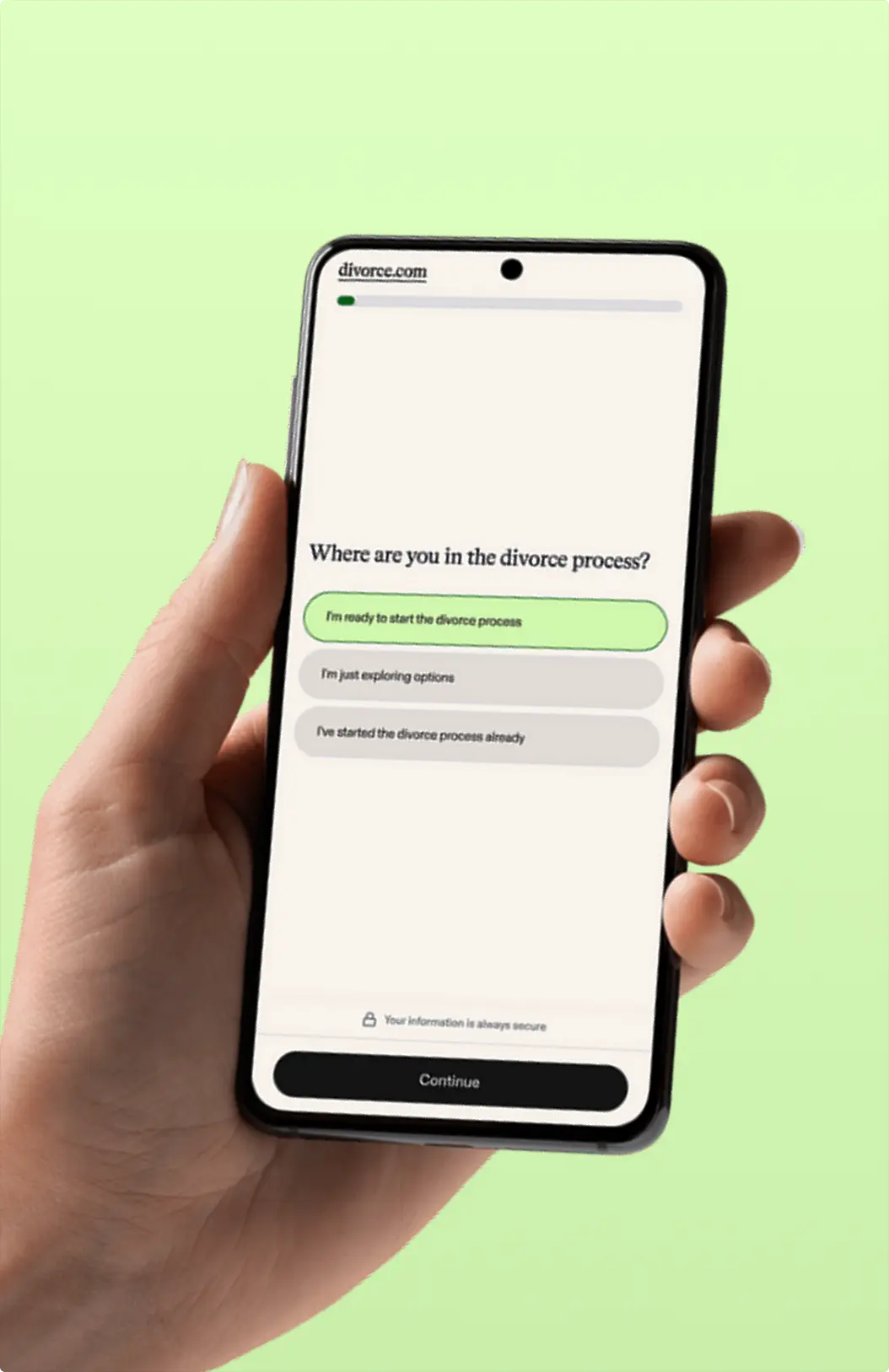
Let’s get your divorce started today.

Let’s get your divorce started today.

Complete your divorce forms online

We can help you complete and file the right paperwork online.

Start your divorce papers

Ready for your next step?

Get Started